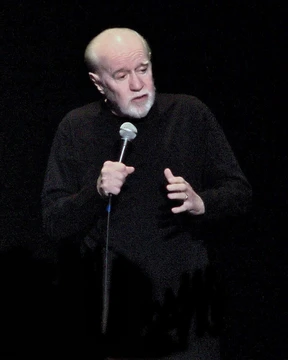
Russell Howard's Good News
A British comedy show offering Russell Howard's take on the week's news.
Russell Howard's Good News is a British comedy and topical news television show that aired on BBC Three from 2009 to 2014 and on BBC Two from 2014 to 2015. Hosted by comedian Russell Howard, the program offered his commentary on the week's news through stand-up, sketches, and humorous video clips, with guest appearances from people recently featured in the media. Produced by Avalon Television, the show was known for its recurring segments and was voted Best Show Ever on BBC Three by Digital Spy users in February 2013.
- field
- Television comedy and topical news show
- nationality
- British
- known_for
- Russell Howard's commentary on weekly news, stand-up, sketches, and the 'It's Not All Doom and Gloom' segment
- broadcast_years
- 2009–2015
- networks
- BBC Three (2009–2014), BBC Two (2014–2015)
Lore & Background
The show's format centered on Howard reviewing news stories from Britain and worldwide, using stand-up, sketches, recurring gags, and internet clips. Segments were organized by topics such as Big News, Sports, Politics, and Animals, with only Big News, Mystery Guest/Guest, and It's Not All Doom and Gloom being regular features. The Mystery Guest segment, from Series 2 to 8, was unrehearsed: Howard was not told who his guest was, only that they had been in the news that week, and he had to guess their story based on clues. In one instance, Howard broke his hand during a stunt demonstration, requiring the remaining episodes of that series to be less physically demanding. From Series 9, the segment was renamed 'Guest' and became a straightforward interview with a notable achiever.
Reader's Guide
Russell Howard's Good News was significant as a flagship topical comedy show on BBC Three, later moving to BBC Two for its final two series. Its blend of stand-up, sketches, and user-submitted clips reflected the growing influence of internet culture on television comedy. The show's 'It's Not All Doom and Gloom' segment, which ended each episode with a heartwarming story, became a distinctive feature. The program also faced controversy: in November 2015, Howard attacked Conservative MP Philip Davies on air, leading to a BBC correction and apology after Davies complained of misrepresentation. The show's legacy includes its extended version, Good News Extra, and its move to Sky One as The Russell Howard Hour. Repeats continue on Comedy Central, Dave, and W.
Did You Know?
- The show was voted Best Show Ever on BBC Three by Digital Spy users in February 2013.
- Howard broke his hand during a Mystery Guest segment when a breakable stool collapsed under him.
- The BBC published a correction after Howard misrepresented MP Philip Davies' views on disabled people and filibustering.
- Repeats of earlier episodes are broadcast on Comedy Central, Dave, and W.
Format & Production
The show was a British comedy and topical news programme that ran on BBC Three from 2009 to 2014 before shifting to BBC Two for its final two series in 2014 and 2015. Produced by independent company Avalon Television with Mark Iddon, Robyn O'Brien, and David Howarth at the helm, the format centred on Howard's weekly commentary on news stories from Britain and beyond. His delivery blended stand-up routines, scripted sketches, recurring gags, and internet video clips (always credited to their owners) to extract humour from both the story and its subject matter. Episodes were organised into topical categories—ranging from Big News and Sports to Politics, Animals, and Religion—separated by stop-motion animated title cards. Only three segments were fixed: Big News, the Mystery Guest interview, and the closing It's Not All Doom and Gloom. Everything else rotated depending on what the week's headlines demanded, meaning a given episode might feature a segment on Health while another focused on Technology or a one-off like the Royal Wedding in Series 4.
The Mystery Guest Segment
One of the show's most distinctive features was the Mystery Guest segment, which ran from Series 2 through Series 8. The premise was deliberately chaotic: Howard was never told in advance who he would be interviewing. All he knew was that the person had appeared in the news that week—whether in a national broadsheet, a regional paper, or an online outlet. Using clues supplied by the crew and the guest themselves, he had to deduce the story before launching into an unscripted conversation about their background, skills, and motivations. Guests frequently demonstrated their talents or taught Howard something new, from emergency rescue techniques to dance moves, sports, and various fighting styles. Series finales elevated the format with a VIP guest from television, film, or sport whom Howard personally admired; in one memorable instance, Star Wars actor Jeremy Bulloch quizzed him in a parody of Mastermind. Because everything was unrehearsed, physical mishaps were inevitable—most notably a broken hand in Series 5 when a breakable stool collapsed under his weight during a stunt rehearsal, forcing the crew to swap in less demanding guests for the remainder of that run.
It's Not All Doom and Gloom & Cultural Reach
Despite its satirical edge, Good News consistently closed with a segment called It's Not All Doom and Gloom, which stripped away all comedy to spotlight a genuinely moving story. The focus was typically on someone who had overcome personal hardship, disability, or the struggles of their homeland to achieve something remarkable, or on an individual whose charitable work had made a tangible difference to those less fortunate. This deliberate tonal shift gave the programme a human anchor and set it apart from purely topical satire. Beyond the weekly broadcast, the show found a wider audience through appearances on Children in Need in 2011 and Red Nose Day in 2013, where it contributed sketches from recent episodes alongside a fresh segment of the same feel-good material. Repeats also found homes on Comedy Central, Dave, and W. The show's cultural standing was cemented in February 2013, when Digital Spy readers voted it the Best Show Ever on BBC Three in celebration of the channel's tenth anniversary—a testament to how a single comedian's weekly news commentary could become a touchstone for a generation of viewers.
Defining Moments & Aftermath
The show's trajectory was marked by both triumph and turbulence. In June 2014, the BBC announced that Good News would graduate from BBC Three to BBC Two after Series 8, with Series 9 arriving in late October of that year and the tenth and final series premiering on 22 October 2015. The move signalled the network's confidence in the format, yet it also heralded an uncertain future. On 29 November 2016, the BBC confirmed it had no immediate plans to commission another series, though it noted Howard would continue to appear on its channels from time to time. The show subsequently relocated to Sky One under the new title The Russell Howard Hour. The programme's final year also carried a controversial note: in November 2015, Howard launched a scathing verbal attack on Conservative MP Philip Davies during a live broadcast, calling him an "arsehole," "windbag," "wanker," and a "toad-faced hypocrite." Together, these episodes—the channel upgrade, the eventual BBC departure, the Sky rebrand, and the on-air confrontation—illustrate how Good News existed at the intersection of mainstream television, political commentary, and the unpredictable energy of live stand-up.
More in British stand-up comedy television series 1-24
Spotted an error? Know more?
This is a living reference — every entry is fact-audited, and reader corrections feed straight into our audit queue. Suggest an edit · See this site's audit record