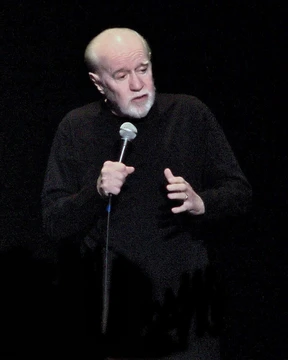
The Alternative Comedy Experience
A stand-up comedy show curated by Stewart Lee.

Wikipedia / Wikimedia Commons
Premiering on 5 February 2013 on Comedy Central UK, *The Alternative Comedy Experience* was a stand-up series built around live sets filmed at The Stand Comedy Club in Edinburgh in July 2012, paired with backstage interviews. Colin Dench created and produced the show, with Stewart Lee serving as curator. The lineup featured critically acclaimed comedians such as Tony Law, David O'Doherty, Paul Foot, Simon Munnery, Josie Long, Henning Wehn, Stephen Carlin, Isy Suttie, Glenn Wool, Andy Zaltzman, Eleanor Tiernan, Bridget Christie, Boothby Graffoe, Maeve Higgins, Phil Nichol, Robin Ince, David Kay, and Fern Brady; according to IMDb, 38 comedians appeared across its 25 episodes.
On 29 May 2013, Comedy Central confirmed a second series, also to be filmed at The Stand. Recorded in July 2013, it began broadcasting in July 2014. New additions for the second series included Kevin Eldon, Nish Kumar, Kevin McAleer, and Michael Legge. The show was not renewed for a third series.
- premiered
- 5 February 2013
- network
- Comedy Central (UK)
- creator
- Colin Dench
- curator
- Stewart Lee
- episodes
- 25
- series
- 2
- filmed_at
- The Stand Comedy Club, Edinburgh
Lore & Background
The Alternative Comedy Experience was filmed in July 2012 at The Stand Comedy Club in Edinburgh, with its first episode airing on 5 February 2013 on Comedy Central in the UK. The show was created and produced by Colin Dench and curated by Stewart Lee, featuring live performances and behind-the-scenes interviews. The first series included 25 episodes, with IMDB listing 38 comedians appearing across them, including Tony Law, David O'Doherty, Paul Foot, Simon Munnery, Josie Long, Henning Wehn, Stephen Carlin, Isy Suttie, Glenn Wool, Andy Zaltzman, Eleanor Tiernan, Bridget Christie, Boothby Graffoe, Maeve Higgins, Phil Nichol, Robin Ince, David Kay, and Fern Brady.
Reader's Guide
The Alternative Comedy Experience served as a platform for critically acclaimed stand-up comedians, many of whom were associated with the alternative comedy scene in the UK. Its second series, confirmed on 29 May 2013, was recorded in July 2013 and began broadcast in July 2014, adding comedians such as Kevin Eldon, Nish Kumar, Kevin McAleer, and Michael Legge. The show has not been recommissioned for a third series, marking its legacy as a two-series run that captured a specific moment in British alternative comedy. Its significance lies in its curation by Stewart Lee and its focus on live performances from a notable roster of comedians, offering a snapshot of the scene in the early 2010s.
Did You Know?
- The show was filmed in July 2012 at The Stand Comedy Club in Edinburgh.
- Comedy Central confirmed a second series on 29 May 2013.
- IMDB lists 38 comedians appearing across the 25 episodes of the first series.
- The show has not been recommissioned for a third series.
From Variety Shows to a Comedy Multiverse
Television comedy has been a fixture of broadcasting since the earliest days of entertainment media, and its trajectory tells the story of how a single format gave way to an entire ecosystem. In the United States, one of the very first television programs was the comedy-variety show Texaco Star Theater, which reached its greatest prominence during the years Milton Berle headlined it, from 1948 through 1956. That era of variety shows laid the groundwork, but the landscape has since broadened dramatically. Sitcoms, improvisational comedy, and stand-up have each carved out their own space, while comedic elements have been woven into genres as varied as drama and news programming. Beyond pure entertainment, television comedy serves as a mirror for society. Viewers bring their own perspectives to the material, and those differing reactions can ripple outward, helping to shape and introduce new social norms. In this way, the medium has always been more than laughter; it is a channel through which cultural transitions find their audience.
The Alternative Comedy Uprising
Stand-up comedy has long been a fixture of television, appearing as a staple in variety programs and late-night talk shows, where hosts on programmes such as The Tonight Show traditionally open with a solo comedy monologue. In Britain, the genre hit a high point with the ITV programme The Comedians, which defined a particular style of stage-to-screen humour. But that dominance was not destined to last. In the early 1980s, a new generation of British stand-up performers mounted a direct challenge to what they perceived as the racist and sexist material that had come to dominate the form. Under the banner of alternative comedy, these artists revolutionised the genre, pushing it toward more inclusive and socially conscious territory. Across the Atlantic, the trajectory was different but parallel. Beginning in the mid-1980s, stand-up comedy found a home on numerous American cable channels, where so-called "brick wall" shows—named for their stereotypical fake-brick-wall backdrops—were inexpensive to produce and easy to schedule. Over time, however, stand-up's fortunes on television grew mixed, with the format increasingly relegated to late-night slots or bundled into larger entertainment events.
Improvisation's Long Road to the Screen
Improvisational comedy, in which performers craft their dialogue in real time while acting, has enjoyed a notable presence in the United States, the United Kingdom, and Australia. Long before it found a television audience, the form thrived on radio, and several landmark programs made the leap from the airwaves to the small screen, including The Day Today and The Mary Whitehouse Experience. One of the most celebrated examples is Whose Line Is It Anyway?, which was created in 1988 by The Comedy Store Players—Mike Myers' improvisation students in London. The show first broadcast in the United Kingdom before crossing the Atlantic, where Drew Carey took the helm of the American version until its eventual cancellation. The influence of improvisation has also seeped into scripted comedy. The cast of Curb Your Enthusiasm, for instance, worked from only general episode summaries and frequently invented their own lines in front of the camera, blending the structure of a sitcom with the spontaneity of live performance. This cross-pollination between improv and scripted television has helped keep the genre dynamic and unpredictable.
Comedy as a Window on the News
News comedy occupies a unique niche in television by injecting humour into stories that mainstream outlets report in a straightforward manner, often crafting largely fictional jokes to distil and summarise real events. For many young adults, these programmes have become a primary gateway to understanding the political landscape of their time. Two standout examples are The Daily Show and the "Weekend Update" segment on Saturday Night Live. The Daily Show gained widespread recognition when Jon Stewart stepped into the hosting chair in 1999. The award-winning programme satirises political events and candidates while deploying correspondents to dig deeper into the people and issues at stake. The show's reach was striking during the 2000 U.S. presidential election, when 435,000 young adults tuned in to Stewart's coverage compared with 459,000 who watched traditional news broadcasts. Despite its satirical veneer, journalists have noted that programmes like these still convey genuine news, and their producers remain mindful of ensuring that viewers walk away with real knowledge alongside the laughter.
Gallery
More in British stand-up comedy television series 1-24
Spotted an error? Know more?
This is a living reference — every entry is fact-audited, and reader corrections feed straight into our audit queue. Suggest an edit · See this site's audit record